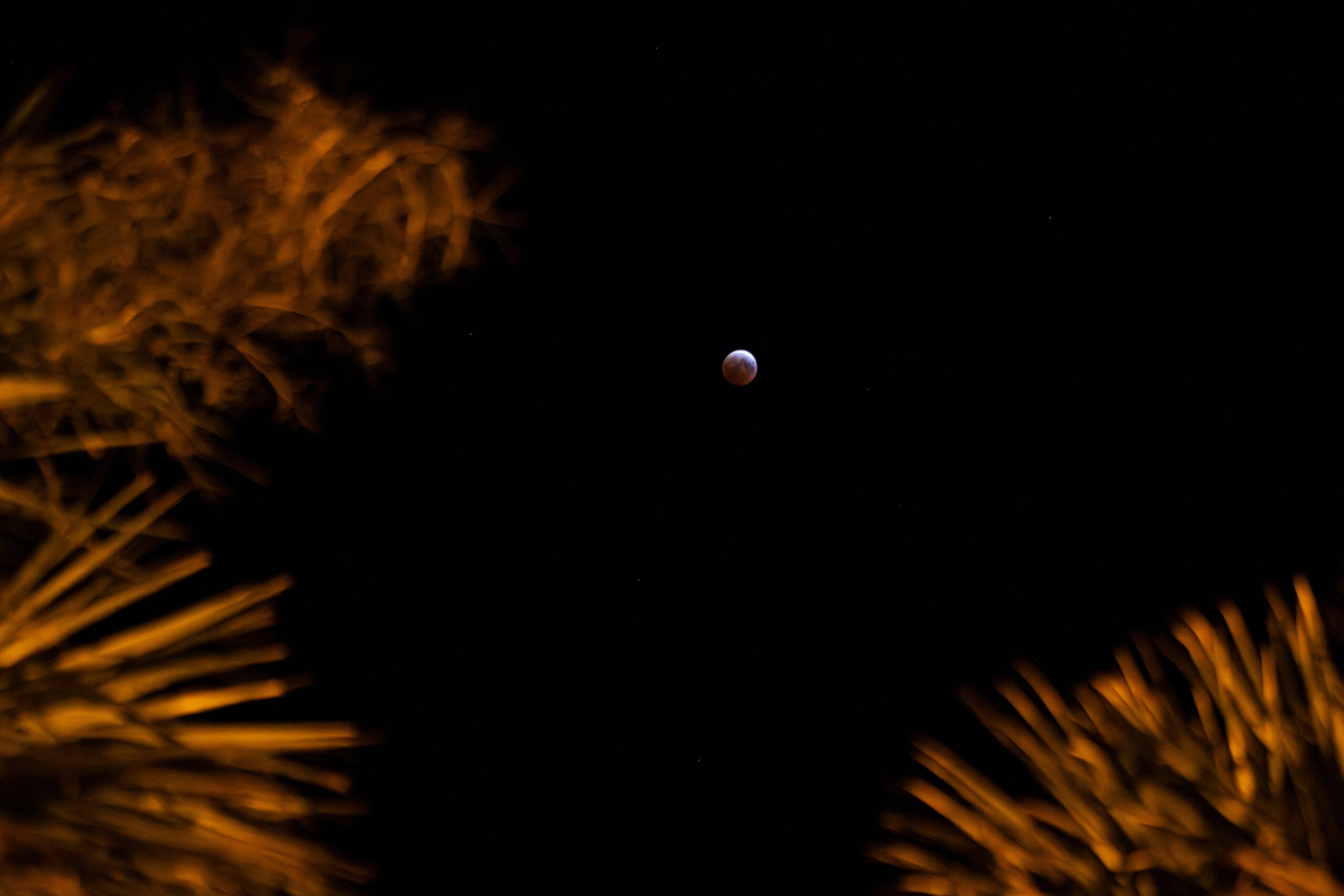
South Florida residents who look up at the sky Thursday night will have a chance to see a near-total lunar eclipse.
The eclipse will be visible across South Florida.
A lunar eclipse occurs when Earth moves between the sun and the moon, creating a shadow that falls across the lunar surface.
Dr. Emily Rice, a professor of astrophysics at the City University of New York, said the event occurs when the sun, Earth and moon reach alignment.
Unlike a solar eclipse, viewers do not need special glasses to safely watch a lunar eclipse.
When to watch the lunar eclipse
The eclipse will unfold over several hours Thursday night and early Friday morning.
- 9:23 p.m. – The eclipse begins: The moon starts to enter the faintest part of Earth’s shadow. The change will be very subtle at first and may be hard to notice with the naked eye. From Miami, the moon will be just above the horizon to the east-southeast.
- 10:33 p.m. – The partial eclipse begins: This is when the show really begins. The umbra — Earth’s dark shadow — will start to visibly cover the lunar disk. The moon will be above the horizon to the southeast.
- 12:12 a.m. – The eclipse reaches its peak: The most impressive moment arrives shortly after midnight, already into Friday. The moon will be deeply immersed in Earth’s shadow and may take on reddish, coppery, or orange tones. From Miami, it will be toward the south-southeast.
- 1:51 a.m. – The partial eclipse ends: The Moon will finish exiting Earth’s umbra. From here, the most obvious dark portion of the shadow will fade away.
Where to watch the eclipse
As the eclipse begins around 9:23 p.m., you’ll want to look toward the east-southeast. As the night goes on, the moon will continue rising and shifting toward the south.
At maximum, around 12:12 a.m., it will be about 51 degrees high toward the south-southeast — an excellent position for viewing from the metro area.
This means you won’t need to travel to a spot with a perfectly unobstructed horizon to catch the main part of the eclipse, though getting away from bright lights can significantly improve the experience.
Rice said the sight should be especially striking from South Florida.
“A lot of the moon should also turn reddish,” Rice said. “It should be very, very cool to see this.”
Lunar eclipses occur periodically, but the next total lunar eclipse visible from the region will not occur until June 2029.
Leave a Reply