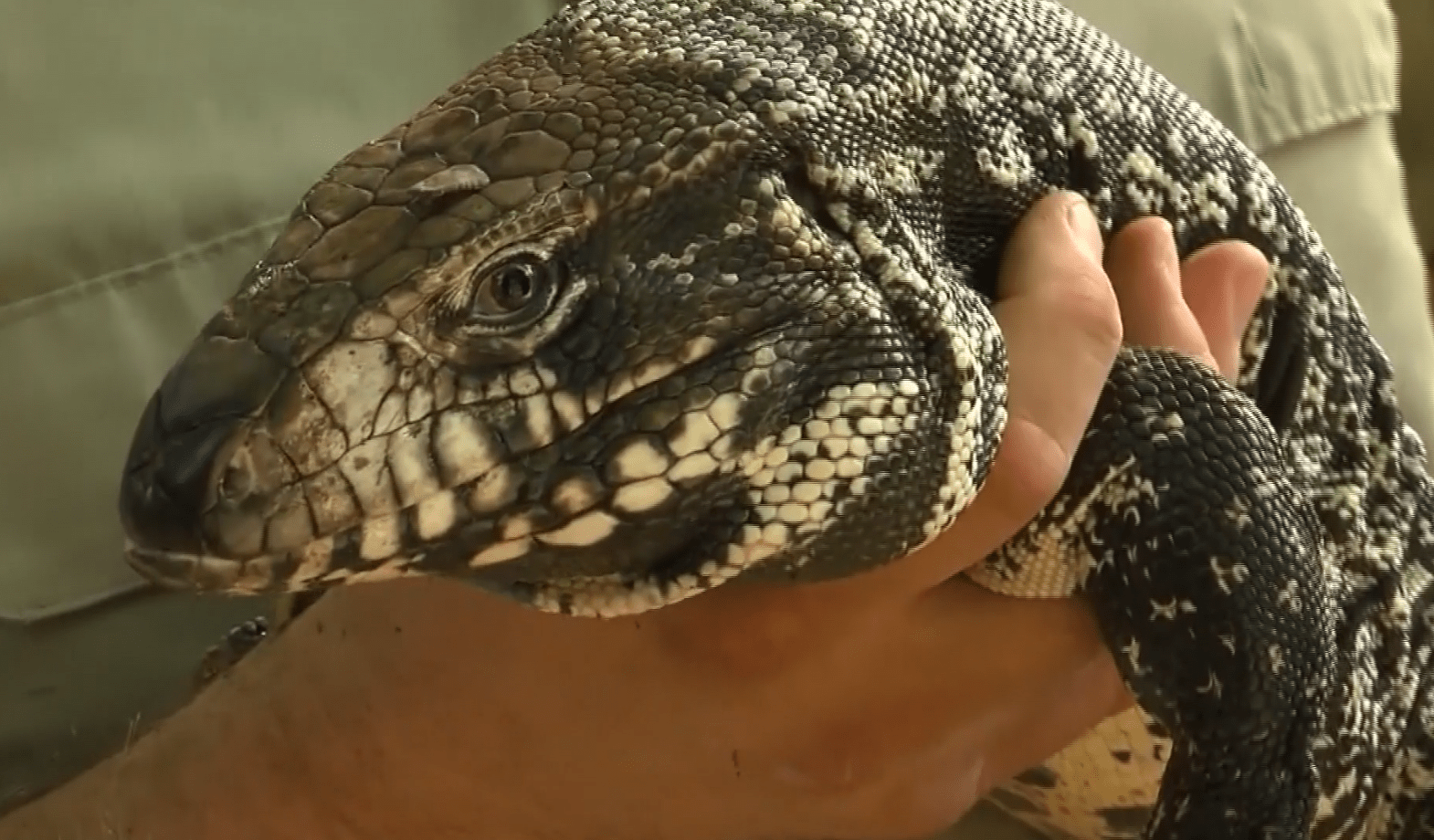
Pythons have been on some people’s radar recently due to the Python Challenge, but they aren’t the only one’s disrupting the wildlife in the Florida Everglades. There are also the Argentine Black and White Tegu.
The Tegu is a large reptile species native to some parts of South America, and they have now made the Everglades their new home, according to the Florida Fish and Wildlife Conservation Commission.
They were brought to Florida through the pet trade. The black and white lizard can reach up to five feet long and can live up to 20 years.
They can be found close to the ground, with FWC saying they barely climb a few feet, but they are excellent swimmers.
During the winter months, they retreat to their burrows and undergo a type of hibernation called brumation. They then begin breeding in the spring and produce 35 eggs per year.
What makes these cold-blooded creatures an issue is their diet. The FWC labels them the “egg eaters.” Tegus eat alligator and other native animals’ eggs and have been found to consume gopher tortoise hatchlings.
Tegus also have very few predators, which has led to them rapidly spreading throughout the Florida habitat. Besides the Everglades, they have been found in Hillsborough County and St. Lucie County.
The FWC does not have a current population estimate.
The FWC encourages reports of Argentine black and white tegu sightings. You can help by taking a picture, noting the location, and reporting this information using the free IveGot1 mobile app, calling 1-888-Ive-Got1 (888-483-4681), or by reporting online at IveGot1.org.