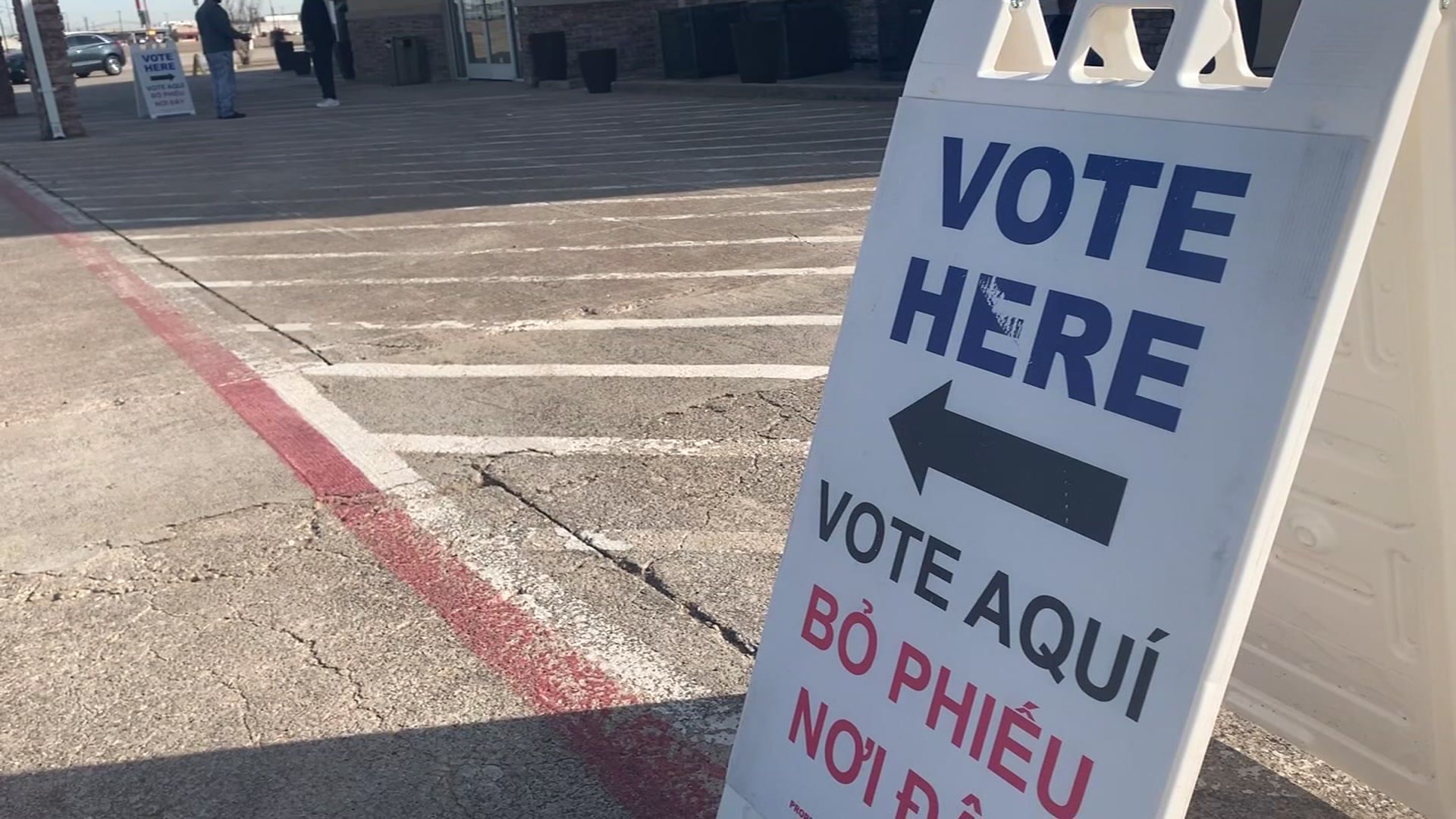
The Tuesday primary election isn’t just a stop on the way to November.
For thousands of residents in Miami-Dade and Broward, that day can directly determine who will make decisions about schools, transportation, taxes, housing, public safety, courts and services that affect daily life.
The Florida primaries will decide federal, state and local races, but many of the most important contests will be in the levels of government closest to voters: school boards, county commissions, city offices and the courts.
In some cases, the Aug. 18 election could decide the final winner.
What’s on the ballot in Miami-Dade?
In Miami-Dade, voters will see a ballot that varies depending on their address and political affiliation.
Some of the biggest races include:
Miami-Dade Commission: decisions on transportation, housing and the budget
The County Commission is one of the institutions with the most direct impact on residents.
Its members make decisions related to:
- County public transit.
- The Miami-Dade budget.
- Urban development.
- Housing.
- Infrastructure.
- Regional services.
This year, three Commission districts are up for election:
District 2
Includes parts of the north and central areas of the county.
Running:
- Marleine Bastien.
- Ernst Jean Louis.
- Miguel “Skip” Quintero.
District 5
Includes areas such as Downtown Miami, Brickell, Miami Beach and Little Havana.
Running:
- Vicki L. Lopez.
- Rob Piper.
- Joe Sanchez.
District 8
Represents parts of southern and southwestern Miami-Dade, including areas such as Kendall and Palmetto Bay.
Running:
- Danielle Cohen Higgins.
- John Edward DuBois.
- Martha “Vega” Hero.
Miami-Dade School Board: an election that affects families
The School Board oversees the nation’s fourth-largest school district, and its decisions affect:
- Public schools.
- School safety.
- Student transportation.
- Educational programs.
- Administration of the school system.
One of the races is School Board District 1, which includes Miami Gardens and nearby areas, where several candidates are seeking to fill the seat left vacant after Steve Gallon III stepped down.
School Board District 8 is also on the ballot.
Miami will also vote on major changes
City of Miami residents will also have local questions on the ballot.
One asks whether municipal elections should move from odd-numbered years to even-numbered years to align with state or county elections starting in 2034 and 2036.
Another question is tied to a 40-year management agreement for the Miami Marine Stadium, including a possible public contribution to restore the facility.
More on elections in Miami-Dade, here: https://www.votemiamidade.gov/elections/home.page
What’s on the ballot in Broward?
Broward will also have elections for local, state and federal offices.
Voters may see races for:
- Broward County Commission.
- The state Legislature.
- Congress.
- Judges.
- Municipal offices, depending on where you live.
One of the biggest local races is Broward Commission District 6, an open seat that includes communities such as Hollywood, Dania Beach, Davie, Fort Lauderdale, Hallandale Beach, Pembroke Park and West Park.
The candidates are:
- Eugen Bold.
- Caryl Shuham.
- A.J. Ryan.
- Jeffrey Jones.
The Broward Commission decides on issues such as:
- County public transit.
- The budget.
- Development.
- Regional services.
- Infrastructure.
More on elections in Broward, here: https://browardvotes.gov
Will there be elections for governor and Congress?
Yes. The ballot may also include state and federal races.
Depending on the district where a voter lives, they may be able to vote for:
- U.S. Senate.
- U.S. House of Representatives.
- Governor and lieutenant governor.
- State Cabinet.
- Florida Senate.
- Florida House of Representatives.
Federal contests include South Florida districts such as District 27, where Rep. María Elvira Salazar is running in a Republican primary.
Your neighbor may have a different ballot
Not all Miami-Dade or Broward residents vote for the same candidates.
Your ballot depends on:
- The city where you live.
- Your Commission district.
- Your school district.
- Your state and federal districts.
- Your registered party.
Someone who lives in Kendall may have different candidates than a person who lives in Miami Gardens, Brickell or Aventura.
That’s why it’s essential to review your customized ballot before you vote.
Key dates for voting
Election Day: Tuesday, Aug. 18, 2026
Early voting in Miami-Dade: Aug. 3–16.
Hours:
Aug. 3–7
7:00 a.m. – 3:00 p.m.
Aug. 8 and 9
8:00 a.m. – 4:00 p.m.
Aug. 10–14
11:00 a.m. – 7:00 p.m.
Aug. 15 and 16
8:00 a.m. – 4:00 p.m.
Early voting in Broward: Aug. 8–16.
Hours: 10:00 a.m. – 7:00 p.m.
Voters can check available locations with the County Elections Office.
Vote-by-mail: last chance to request it
The deadline to request a vote-by-mail ballot is: Thursday, Aug. 6 at 5:00 p.m.
The ballot must arrive at the Elections Office by: Tuesday, Aug. 18 at 7:00 p.m.
Who can vote in the primaries?
Florida has a closed primary system.
That means:
- Registered Republicans vote in the Republican primary.
- Registered Democrats vote in the Democratic primary.
- Voters with no party affiliation generally do not take part in party primaries.
However, all eligible voters can participate in:
- Nonpartisan elections.
- Local referendums.
- Universal primaries, when they apply.
What should you bring to the polling place?
You must present a valid ID with:
- A photo.
- A signature.
Examples:
- Florida driver’s license.
- State ID.
- U.S. passport.
- Military ID.
- Student ID.
- Public employee ID.
- Florida concealed weapon license.
Before you vote: three recommended steps
1. Review your ballot
Don’t wait until you get to the polling place to find out what races are on it.
2. Learn about the office
Ask yourself:
Will this person make decisions about my school?
About my transportation?
About local taxes?
About state laws?
3. Vote early if you can
Early voting offers more flexibility and helps avoid last-minute problems.
Power is closer to home than it seems
A bus route, a school, a street, a building permit or a housing decision usually isn’t decided in Washington.
It’s decided in Miami-Dade, Broward, Tallahassee and in city halls.
That’s why the Aug. 18 primaries are a chance to choose the people who will be responsible for managing the issues residents deal with every day.
Because in Florida, the power that most affects your life is often on the local ballot.
This story was translated from Spanish with the help of a generative artificial intelligence tool. An NBC6 digital editor reviewed the translation.
Leave a Reply